navigate
navigate
navigate
ClearPlate
Helping people with dietary restrictions connect with food vendors and eat with confidence.
Helping people with dietary restrictions connect with food vendors and eat with confidence.
Helping people with dietary restrictions connect with food vendors and eat with confidence.
Helping people with dietary restrictions connect with food vendors and eat with confidence.
Client
Personal Project
Season
Winter 2026
Timeline
1 week
project overview
project summary
ClearPlate is a platform that helps people with dietary restrictions and preferences quickly understand whether food items align with their needs—without social friction or guesswork. Guests scan menus or item labels to receive clear, visual feedback based on their saved preferences. Providers manage ingredient data once and gain tools that reduce staff burden while improving guest trust and operational insight. This was an intentionally time-boxed sprint focused on validating core interactions, data flows, and system logic rather than production-ready infrastructure.
team + role
Team: Solo Product Designer (concept, UX, UI, interaction design, data modeling)
challenges
Food allergy and dietary transparency is fragmented, inconsistent, and inaccessible in real-world dining environments. Existing solutions rely on static menus, QR PDFs, or staff knowledge — creating friction, safety risk, and exclusion for people with allergies and dietary restrictions. Vendors also lack scalable tools to manage ingredient data across changing menus and service contexts.
goals
Food allergy and dietary transparency is fragmented, inconsistent, and inaccessible in real-world dining environments. Existing solutions rely on static menus, QR PDFs, or staff knowledge — creating friction, safety risk, and exclusion for people with allergies and dietary restrictions. Vendors also lack scalable tools to manage ingredient data across changing menus and service contexts.
outcomes
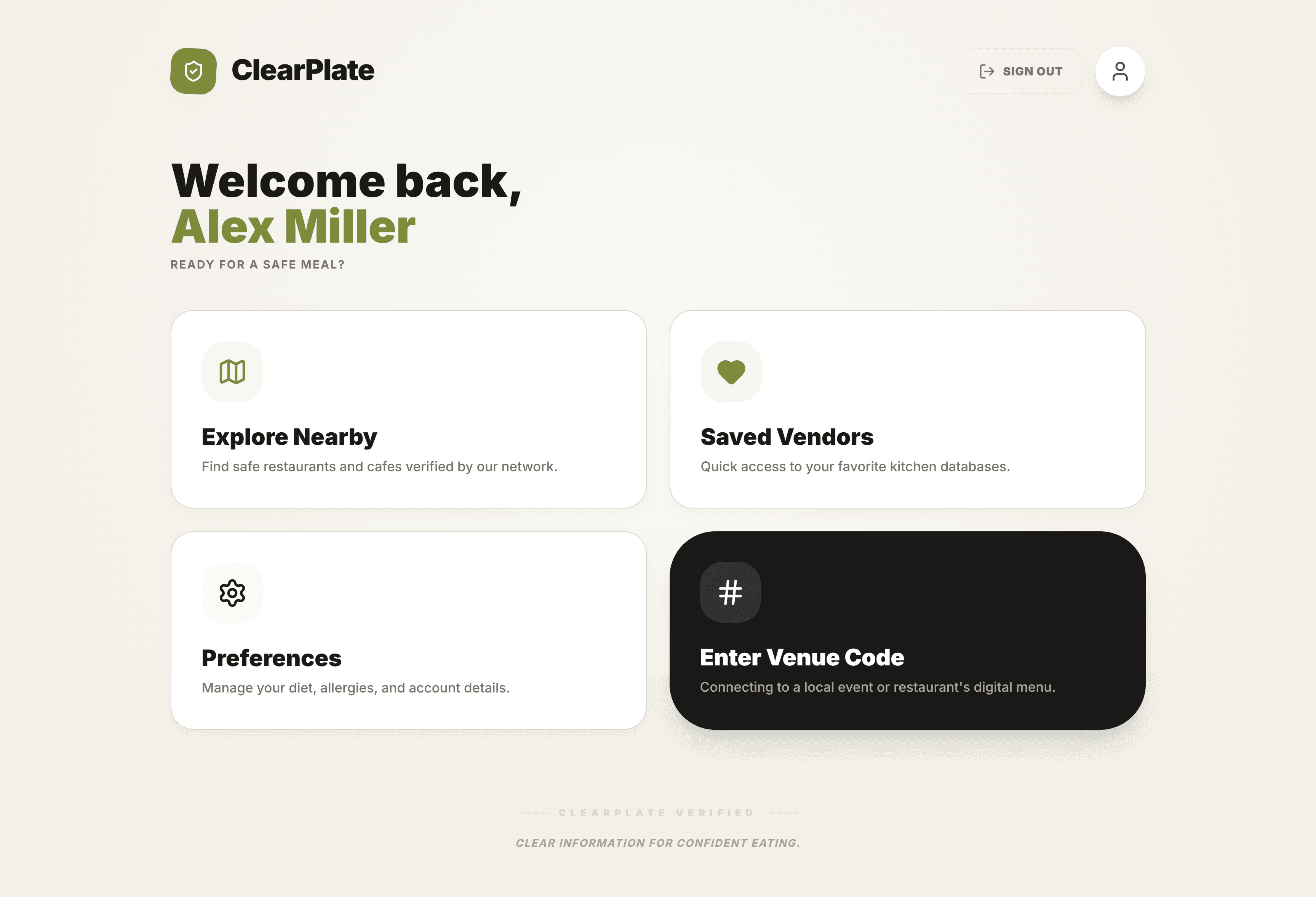
Delivered a mobile-first platform that enables real-time dietary filtering, provider-managed ingredient data, and guest-safe access without requiring accounts. ClearPlate reduces cognitive load for users, improves food safety visibility, and creates a scalable transparency layer that bridges consumer needs with vendor operations.
project overview
project summary
ClearPlate is a platform that helps people with dietary restrictions and preferences quickly understand whether food items align with their needs—without social friction or guesswork. Guests scan menus or item labels to receive clear, visual feedback based on their saved preferences. Providers manage ingredient data once and gain tools that reduce staff burden while improving guest trust and operational insight. This was an intentionally time-boxed sprint focused on validating core interactions, data flows, and system logic rather than production-ready infrastructure.
team + role
Team: Solo Product Designer (concept, UX, UI, interaction design, data modeling)
challenges
Food allergy and dietary transparency is fragmented, inconsistent, and inaccessible in real-world dining environments. Existing solutions rely on static menus, QR PDFs, or staff knowledge — creating friction, safety risk, and exclusion for people with allergies and dietary restrictions. Vendors also lack scalable tools to manage ingredient data across changing menus and service contexts.
goals
Food allergy and dietary transparency is fragmented, inconsistent, and inaccessible in real-world dining environments. Existing solutions rely on static menus, QR PDFs, or staff knowledge — creating friction, safety risk, and exclusion for people with allergies and dietary restrictions. Vendors also lack scalable tools to manage ingredient data across changing menus and service contexts.
outcomes
Delivered a mobile-first platform that enables real-time dietary filtering, provider-managed ingredient data, and guest-safe access without requiring accounts. ClearPlate reduces cognitive load for users, improves food safety visibility, and creates a scalable transparency layer that bridges consumer needs with vendor operations.
project overview
project summary
ClearPlate is a platform that helps people with dietary restrictions and preferences quickly understand whether food items align with their needs—without social friction or guesswork. Guests scan menus or item labels to receive clear, visual feedback based on their saved preferences. Providers manage ingredient data once and gain tools that reduce staff burden while improving guest trust and operational insight. This was an intentionally time-boxed sprint focused on validating core interactions, data flows, and system logic rather than production-ready infrastructure.
team + role
Team: Solo Product Designer (concept, UX, UI, interaction design, data modeling)
challenges
Food allergy and dietary transparency is fragmented, inconsistent, and inaccessible in real-world dining environments. Existing solutions rely on static menus, QR PDFs, or staff knowledge — creating friction, safety risk, and exclusion for people with allergies and dietary restrictions. Vendors also lack scalable tools to manage ingredient data across changing menus and service contexts.
goals
Food allergy and dietary transparency is fragmented, inconsistent, and inaccessible in real-world dining environments. Existing solutions rely on static menus, QR PDFs, or staff knowledge — creating friction, safety risk, and exclusion for people with allergies and dietary restrictions. Vendors also lack scalable tools to manage ingredient data across changing menus and service contexts.
outcomes
Delivered a mobile-first platform that enables real-time dietary filtering, provider-managed ingredient data, and guest-safe access without requiring accounts. ClearPlate reduces cognitive load for users, improves food safety visibility, and creates a scalable transparency layer that bridges consumer needs with vendor operations.
project overview
project summary
ClearPlate is a platform that helps people with dietary restrictions and preferences quickly understand whether food items align with their needs—without social friction or guesswork. Guests scan menus or item labels to receive clear, visual feedback based on their saved preferences. Providers manage ingredient data once and gain tools that reduce staff burden while improving guest trust and operational insight. This was an intentionally time-boxed sprint focused on validating core interactions, data flows, and system logic rather than production-ready infrastructure.
team + role
Team: Solo Product Designer (concept, UX, UI, interaction design, data modeling)
challenges
Food allergy and dietary transparency is fragmented, inconsistent, and inaccessible in real-world dining environments. Existing solutions rely on static menus, QR PDFs, or staff knowledge — creating friction, safety risk, and exclusion for people with allergies and dietary restrictions. Vendors also lack scalable tools to manage ingredient data across changing menus and service contexts.
goals
Food allergy and dietary transparency is fragmented, inconsistent, and inaccessible in real-world dining environments. Existing solutions rely on static menus, QR PDFs, or staff knowledge — creating friction, safety risk, and exclusion for people with allergies and dietary restrictions. Vendors also lack scalable tools to manage ingredient data across changing menus and service contexts.
outcomes
Delivered a mobile-first platform that enables real-time dietary filtering, provider-managed ingredient data, and guest-safe access without requiring accounts. ClearPlate reduces cognitive load for users, improves food safety visibility, and creates a scalable transparency layer that bridges consumer needs with vendor operations.
discovery highlights
friction. idea. opportunity
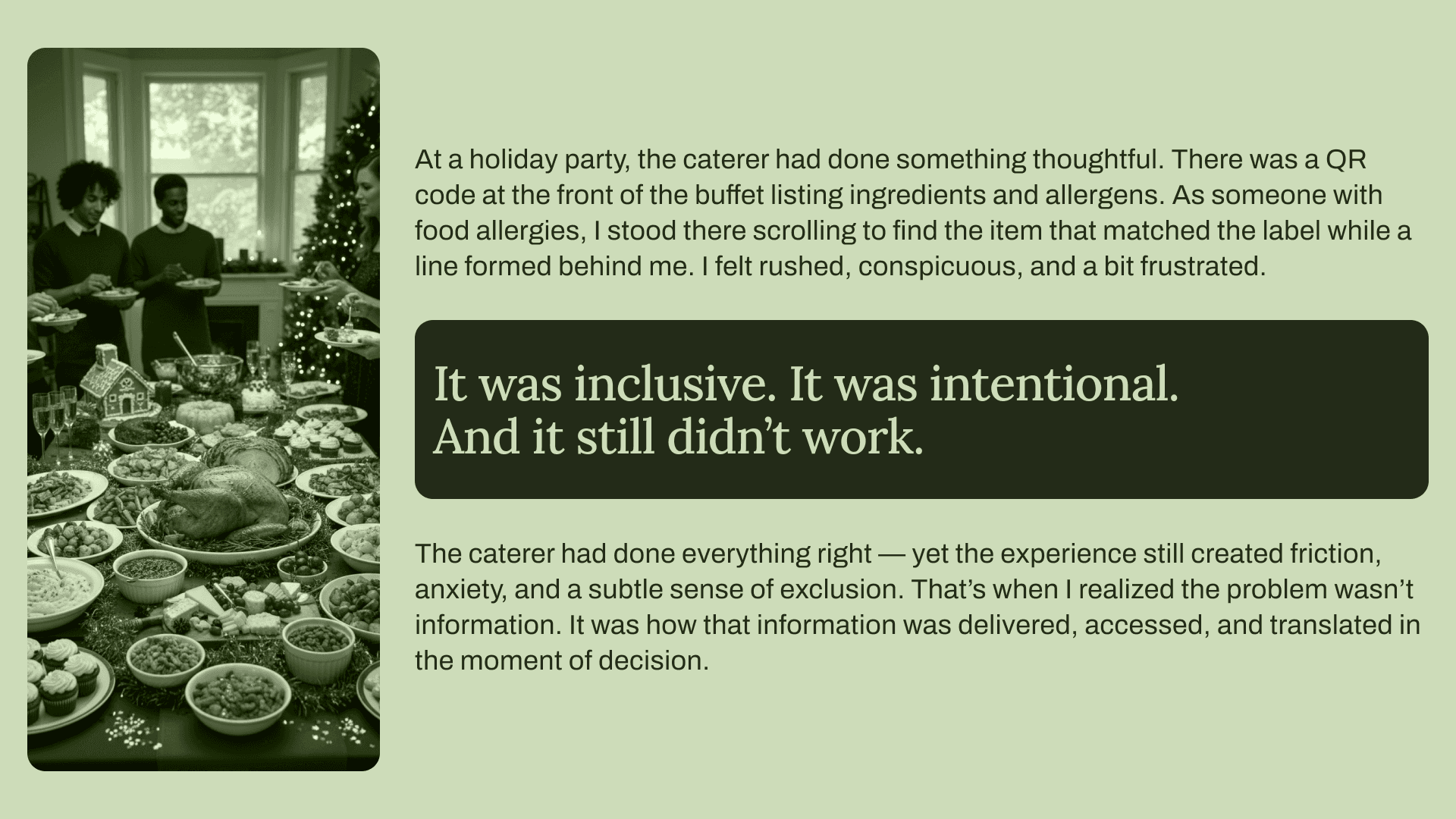
is this a problem?
if so, who does it impact? how does it impact them?
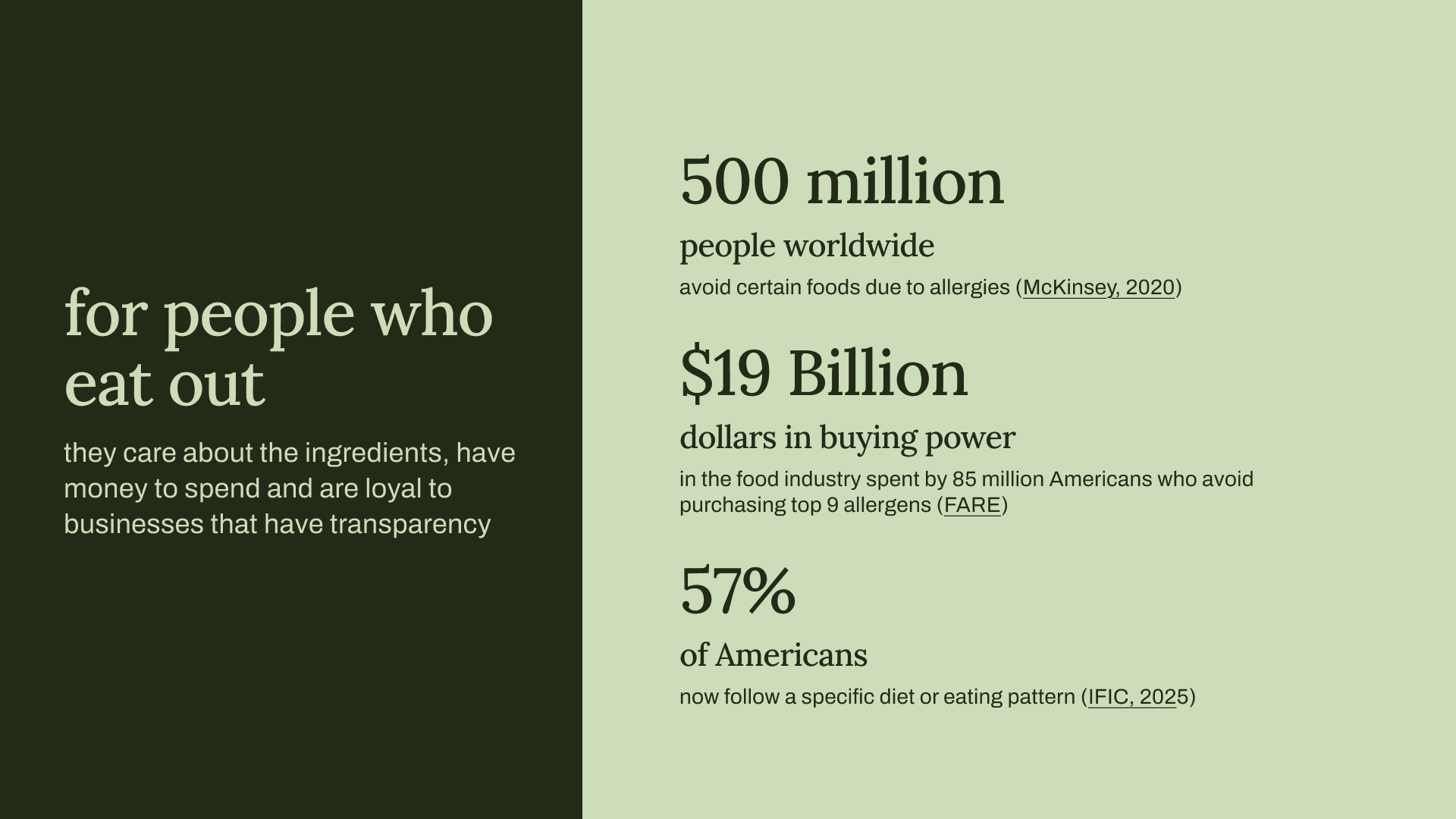
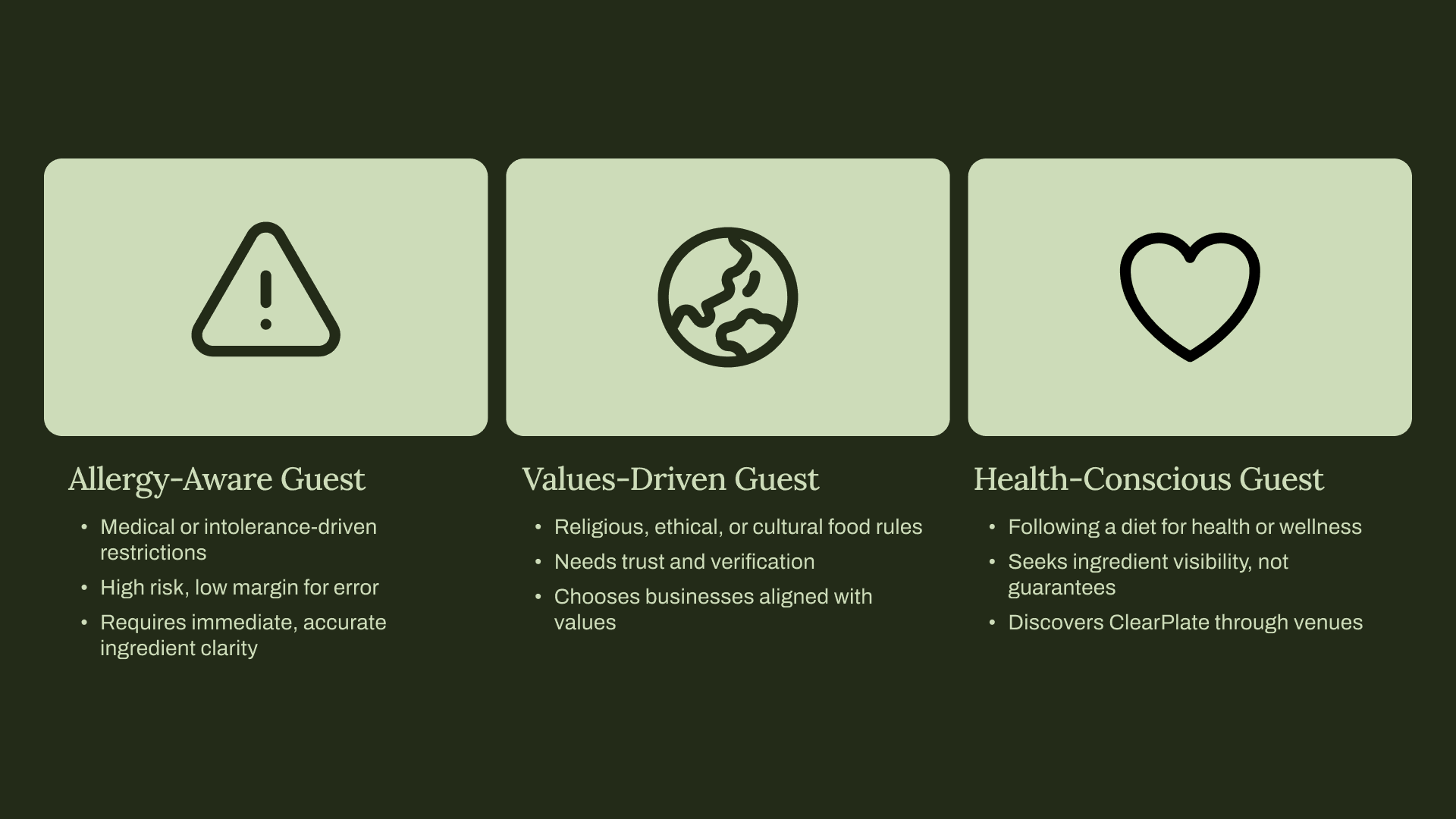
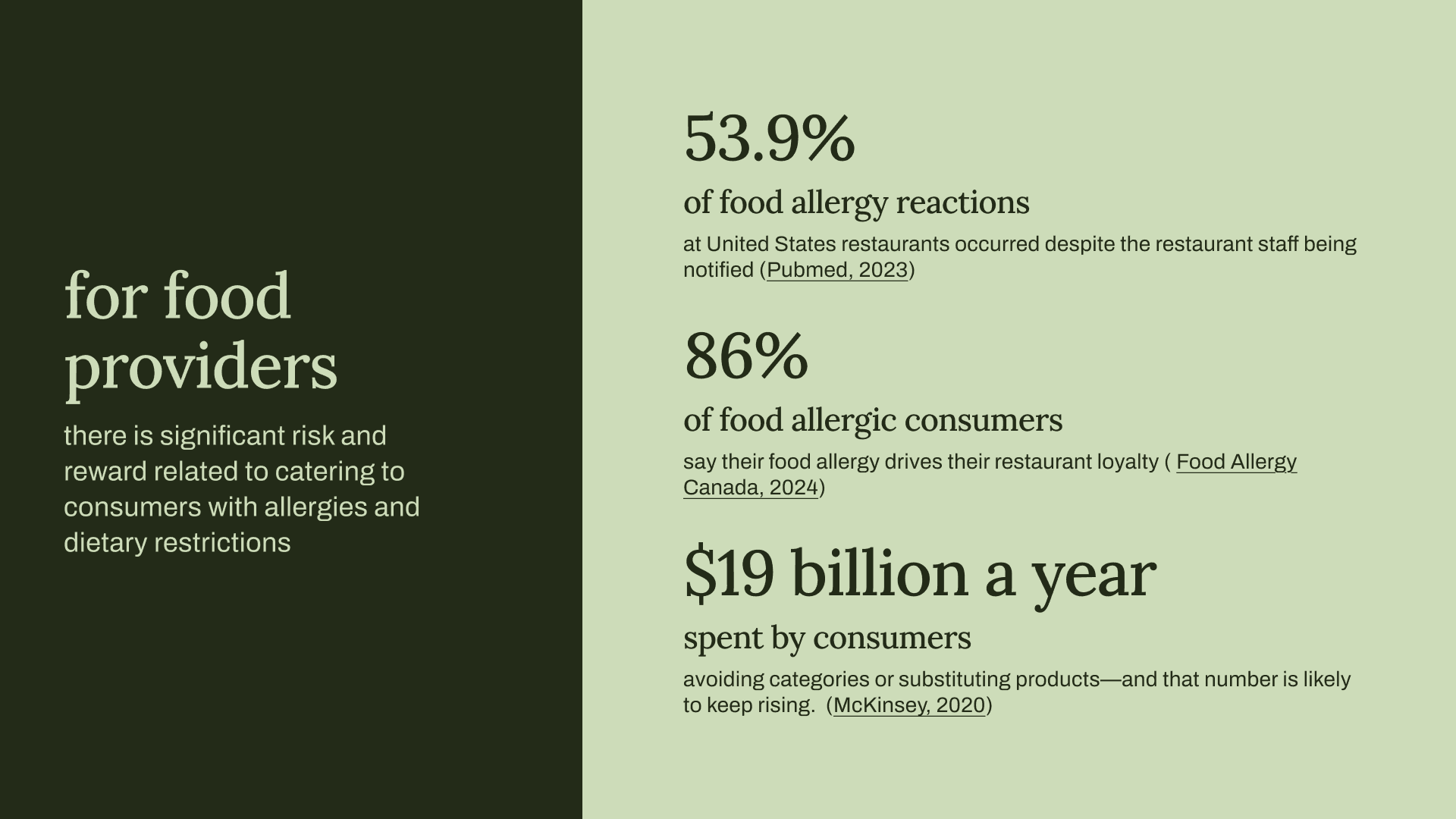
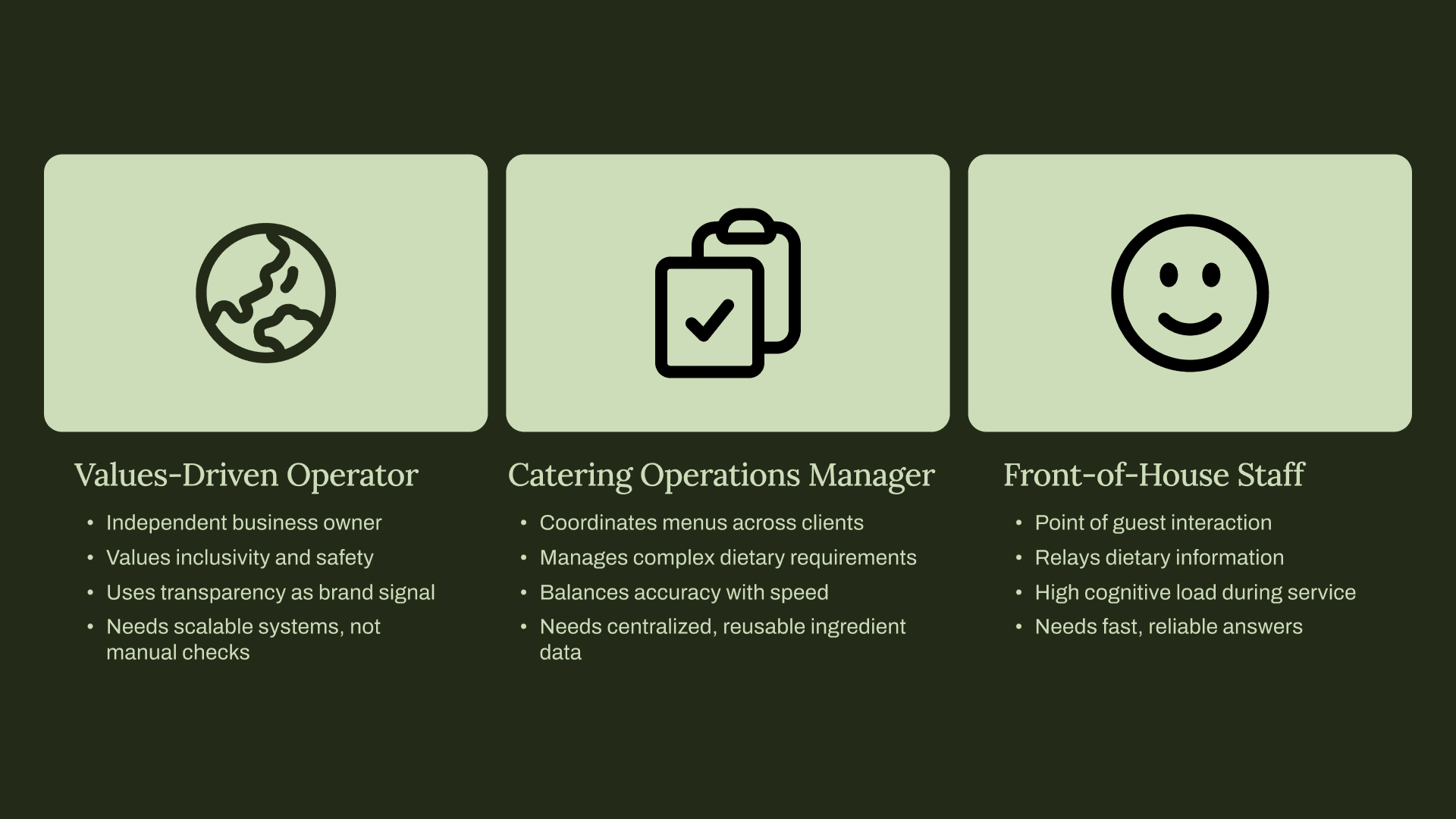
discovery highlights
friction. idea. opportunity
is this a problem?
if so, who does it impact? how does it impact them?
discovery highlights
friction. idea. opportunity
is this a problem?
if so, who does it impact? how does it impact them?
discovery highlights
friction. idea. opportunity
is this a problem?
if so, who does it impact? how does it impact them?
process highlights
drafting with prompts
how can I shift from idea to iteration?
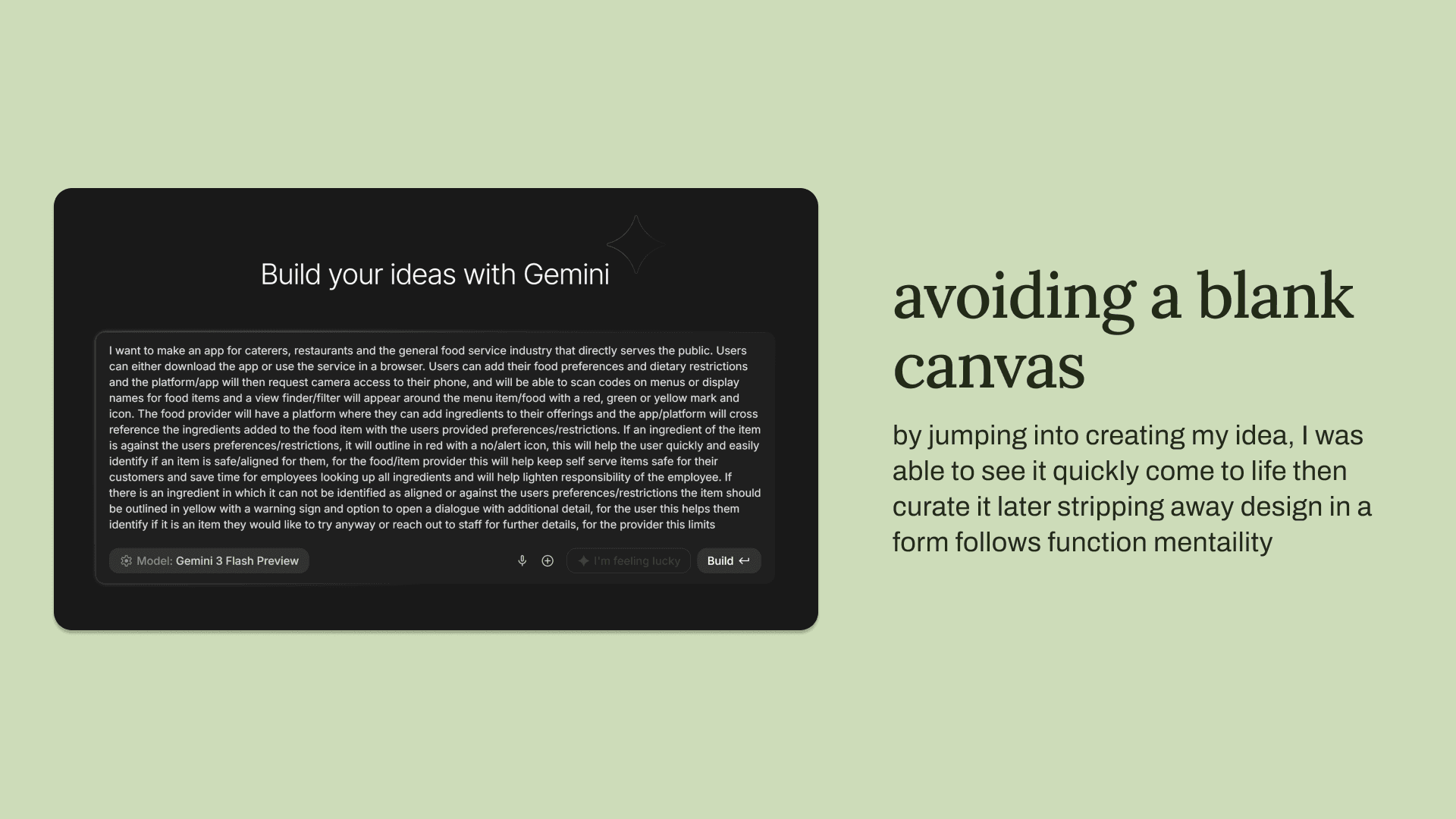
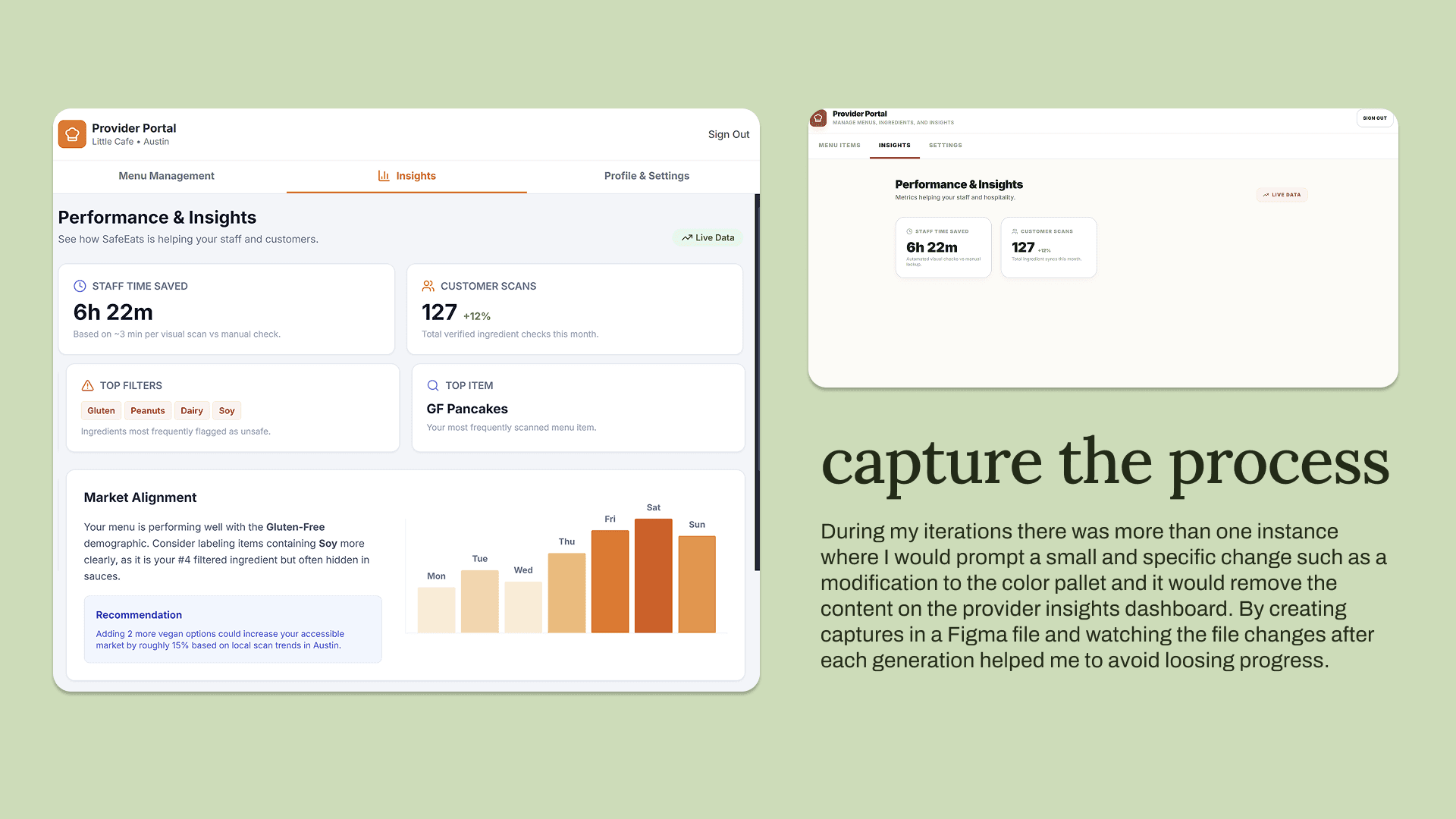
process highlights
drafting with prompts
how can I shift from idea to iteration?
process highlights
drafting with prompts
how can I shift from idea to iteration?
process highlights
drafting with prompts
how can I shift from idea to iteration?
feature highlights
item codes
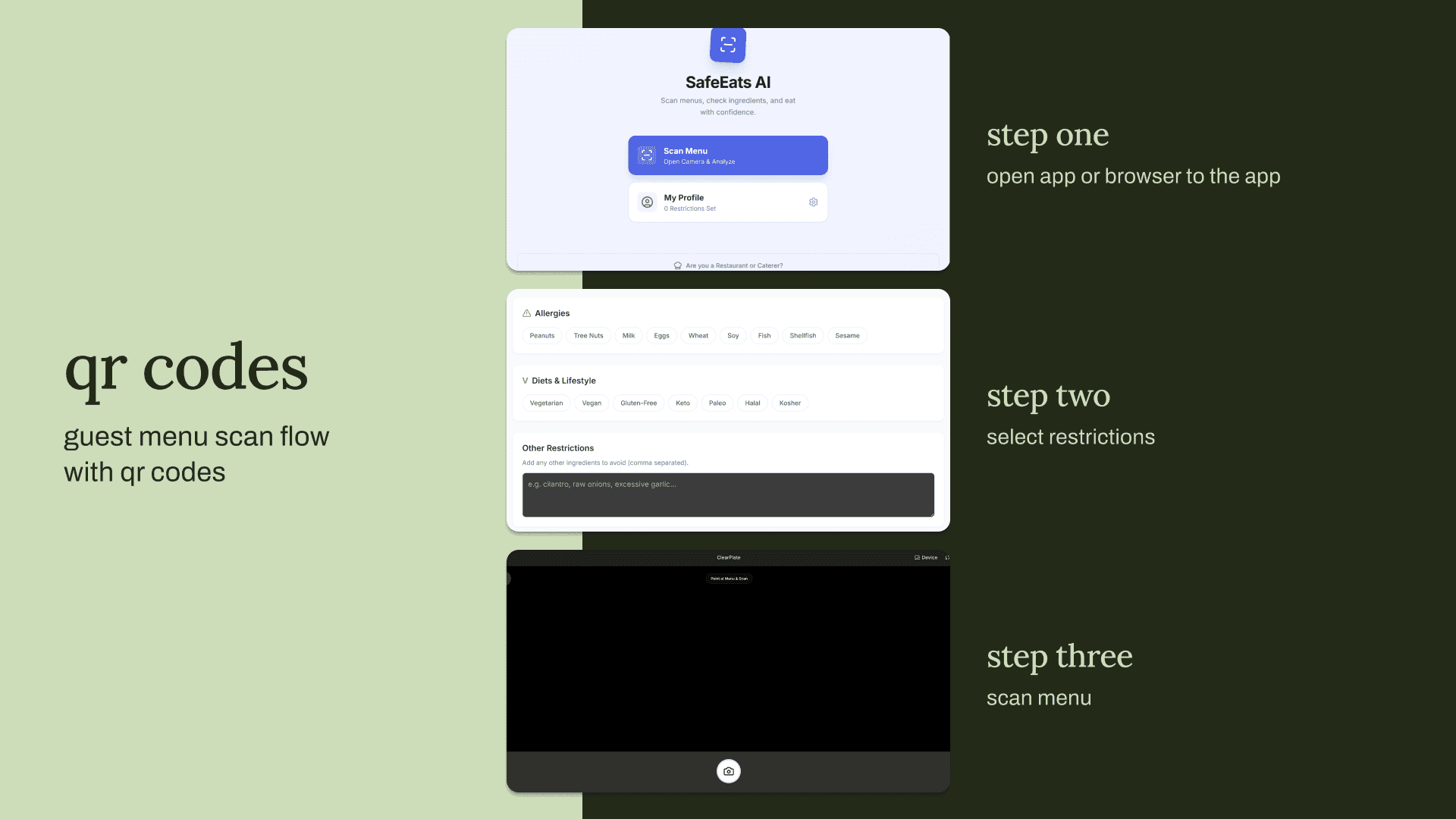
In my original concept, I wanted to use qr codes for scanner to identify the items. To test the scanner with qr code items I needed to print them out.
this experience created questions
how might I make it easier for a vendor to print the labels?
what if I was a caterer and someone had forgotten the qr code labels?
what if I was a restaurant with a tightly packed menu list, where would they fit?
what if I was a guest and my phone was having trouble recognizing the code in different lighting conditions?
how might I simplify the process?
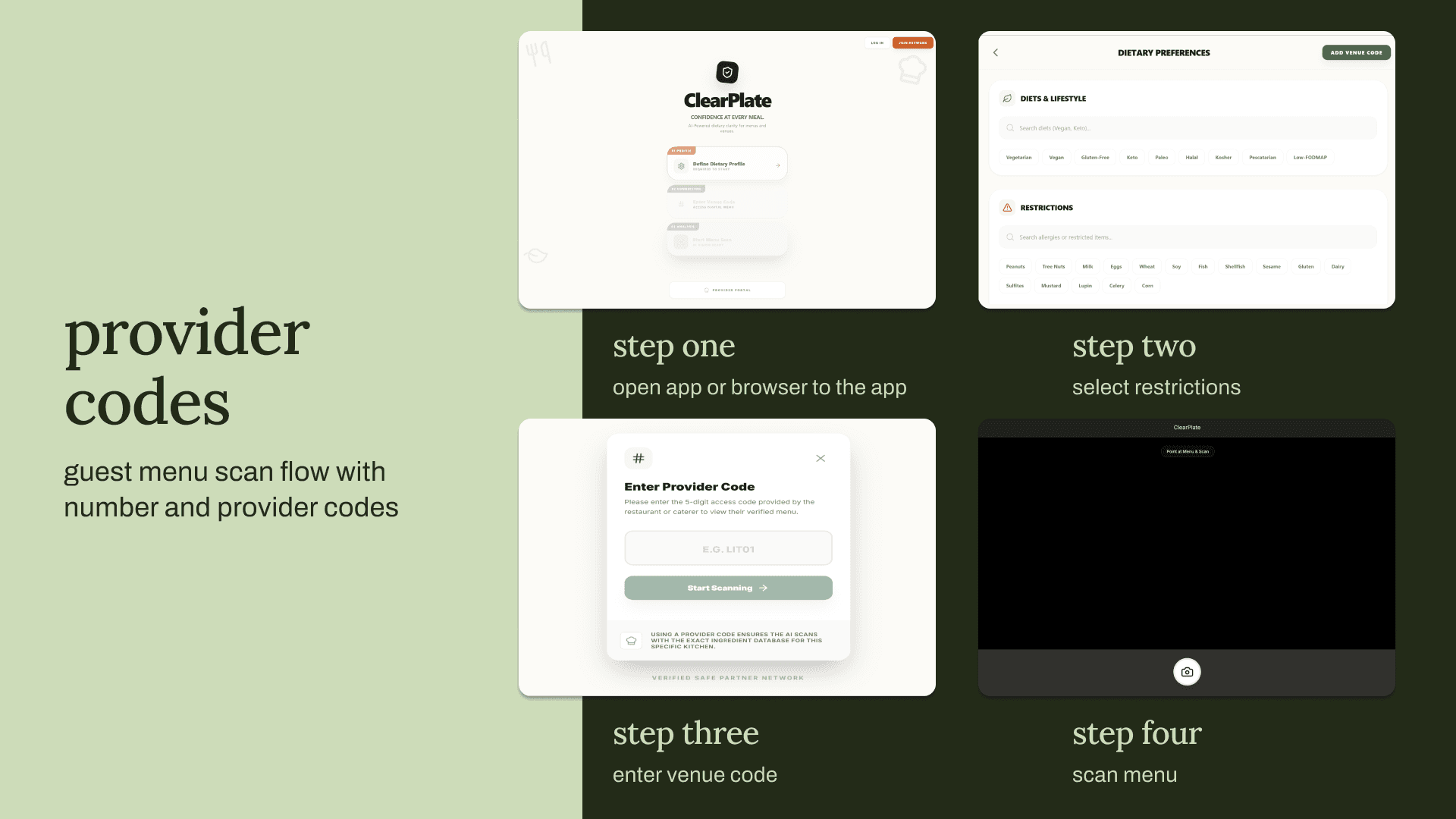
what if items were identified by short codes?
how might we keep the values unique in the app database?
what if each provider had a unique code?
tradeoff choice
This exploration led me to deprioritize QR-only identification in favor of short codes. Accepting one extra cognitive step for guests in order to reduce operational friction, printing complexity, and failure in real-world conditions.
guest pathways
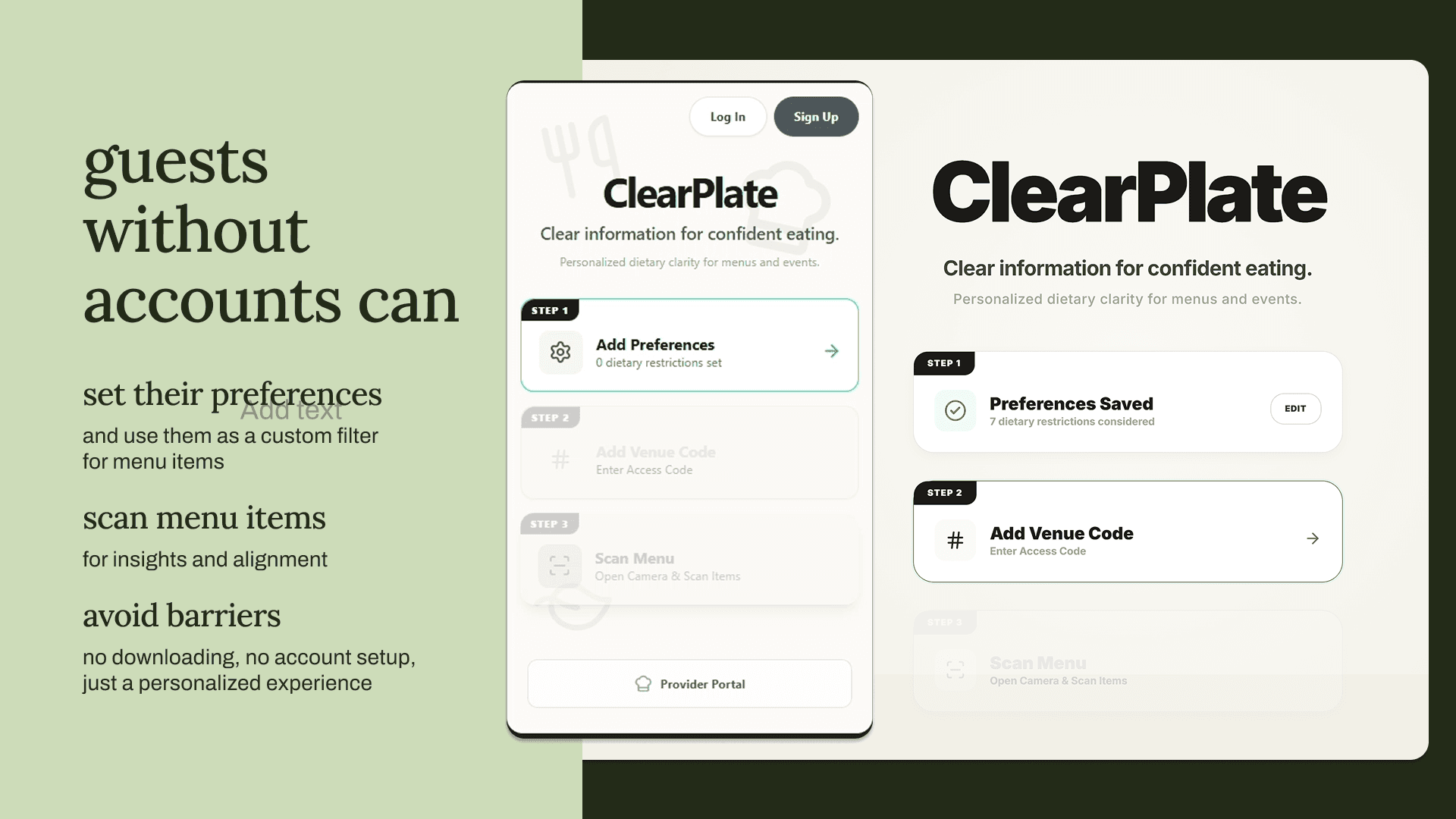
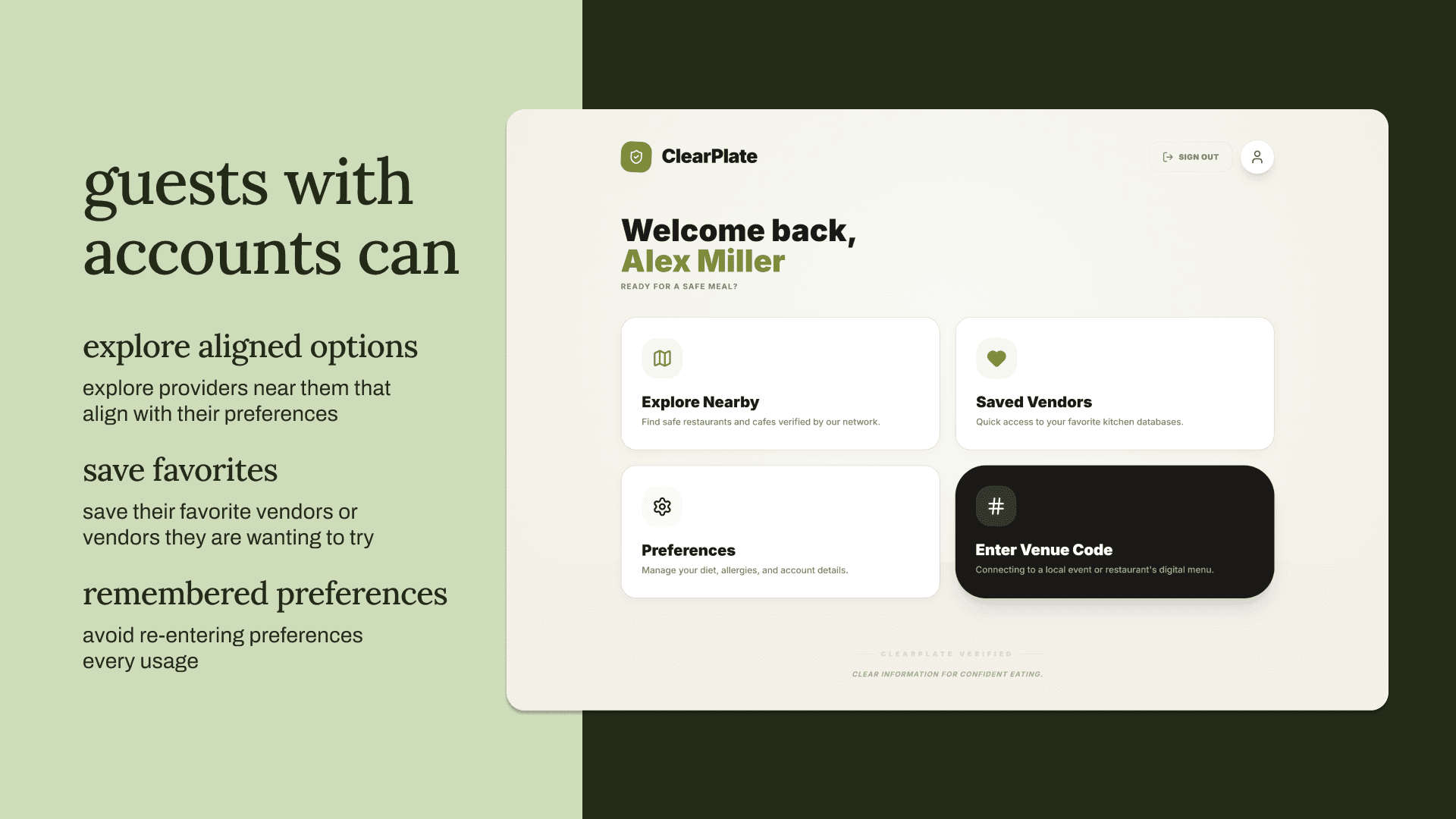
For guests to have low barrier to entry for building a relationship. Authentication state changes experience depth, not system authority
guest accounts
requiring the guest to create an account before building trust will render the platform useless with barrier to entry too high
guest accounts can be beneficial for building a user base
gathering data on user preferences can provide providers with insights
what might incentivize a user to create an account?
building trust before requiring commitment
saving vendors they enjoyed or would like to visit
exploring vendors nearby that align with their requirements
tradeoff choice
prioritize building trust with low barrier to entry by no account requirement leverage that relationship and incentivize them to stay benefiting multiple stakeholders
outcomes + next steps
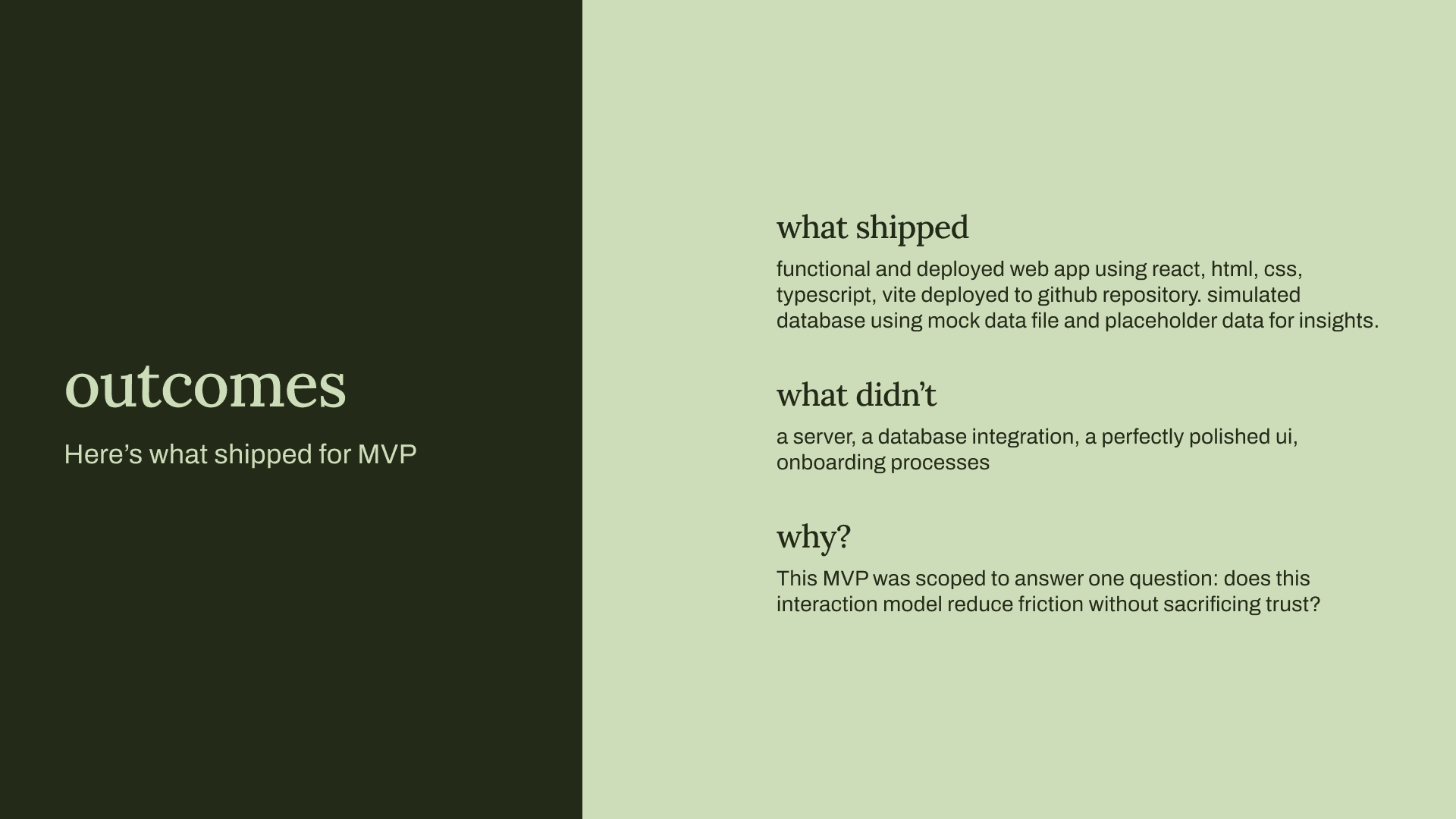
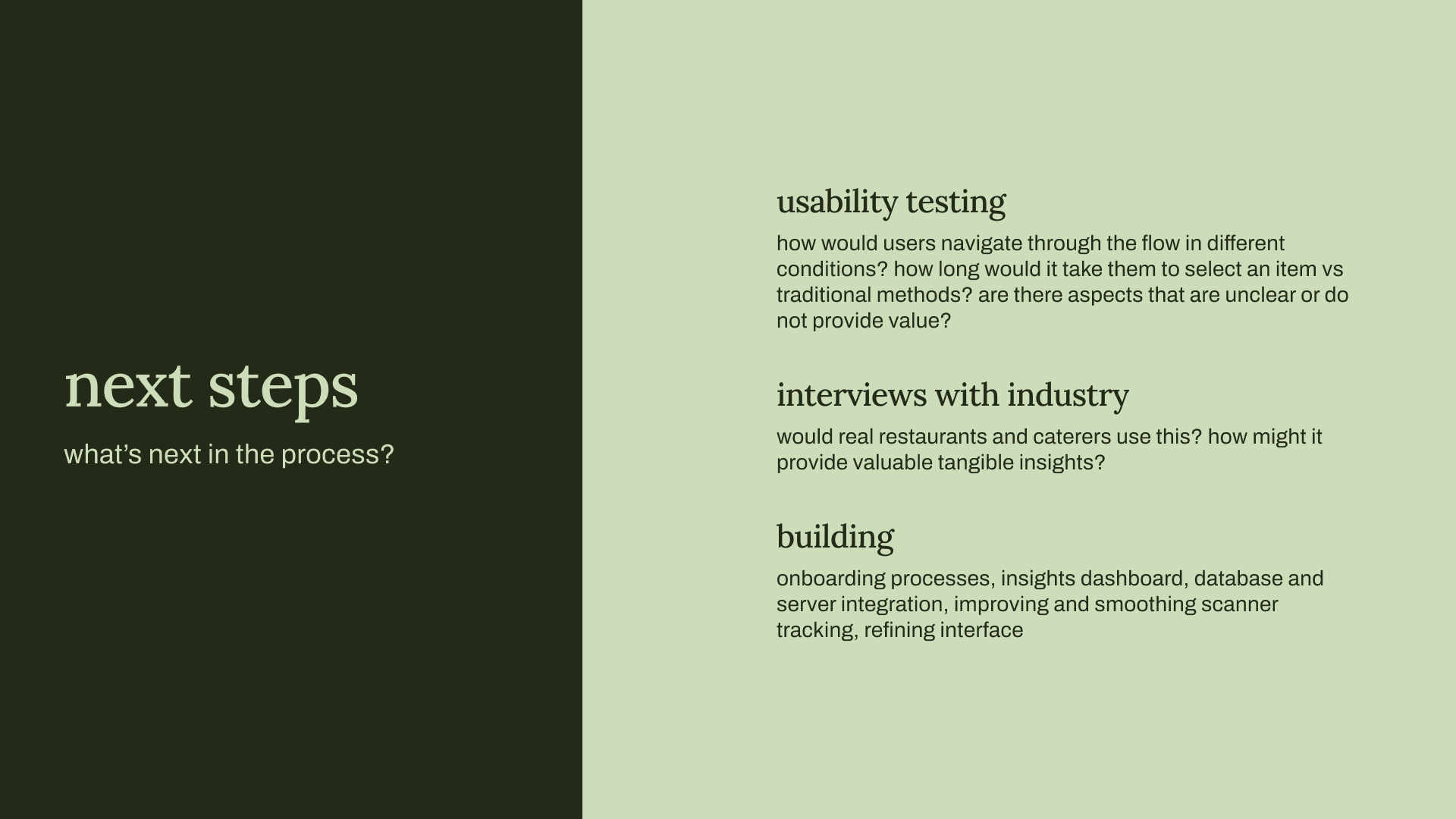
Here’s what shipped for MVP and next steps
feature highlights
item codes
In my original concept, I wanted to use qr codes for scanner to identify the items. To test the scanner with qr code items I needed to print them out.
this experience created questions
how might I make it easier for a vendor to print the labels?
what if I was a caterer and someone had forgotten the qr code labels?
what if I was a restaurant with a tightly packed menu list, where would they fit?
what if I was a guest and my phone was having trouble recognizing the code in different lighting conditions?
how might I simplify the process?
what if items were identified by short codes?
how might we keep the values unique in the app database?
what if each provider had a unique code?
tradeoff choice
This exploration led me to deprioritize QR-only identification in favor of short codes. Accepting one extra cognitive step for guests in order to reduce operational friction, printing complexity, and failure in real-world conditions.
guest pathways
For guests to have low barrier to entry for building a relationship. Authentication state changes experience depth, not system authority
guest accounts
requiring the guest to create an account before building trust will render the platform useless with barrier to entry too high
guest accounts can be beneficial for building a user base
gathering data on user preferences can provide providers with insights
what might incentivize a user to create an account?
building trust before requiring commitment
saving vendors they enjoyed or would like to visit
exploring vendors nearby that align with their requirements
tradeoff choice
prioritize building trust with low barrier to entry by no account requirement leverage that relationship and incentivize them to stay benefiting multiple stakeholders
outcomes + next steps
Here’s what shipped for MVP and next steps
feature highlights
item codes
In my original concept, I wanted to use qr codes for scanner to identify the items. To test the scanner with qr code items I needed to print them out.
this experience created questions
how might I make it easier for a vendor to print the labels?
what if I was a caterer and someone had forgotten the qr code labels?
what if I was a restaurant with a tightly packed menu list, where would they fit?
what if I was a guest and my phone was having trouble recognizing the code in different lighting conditions?
how might I simplify the process?
what if items were identified by short codes?
how might we keep the values unique in the app database?
what if each provider had a unique code?
tradeoff choice
This exploration led me to deprioritize QR-only identification in favor of short codes. Accepting one extra cognitive step for guests in order to reduce operational friction, printing complexity, and failure in real-world conditions.
guest pathways
For guests to have low barrier to entry for building a relationship. Authentication state changes experience depth, not system authority
guest accounts
requiring the guest to create an account before building trust will render the platform useless with barrier to entry too high
guest accounts can be beneficial for building a user base
gathering data on user preferences can provide providers with insights
what might incentivize a user to create an account?
building trust before requiring commitment
saving vendors they enjoyed or would like to visit
exploring vendors nearby that align with their requirements
tradeoff choice
prioritize building trust with low barrier to entry by no account requirement leverage that relationship and incentivize them to stay benefiting multiple stakeholders
outcomes + next steps
Here’s what shipped for MVP and next steps
feature highlights
item codes
In my original concept, I wanted to use qr codes for scanner to identify the items. To test the scanner with qr code items I needed to print them out.
this experience created questions
how might I make it easier for a vendor to print the labels?
what if I was a caterer and someone had forgotten the qr code labels?
what if I was a restaurant with a tightly packed menu list, where would they fit?
what if I was a guest and my phone was having trouble recognizing the code in different lighting conditions?
how might I simplify the process?
what if items were identified by short codes?
how might we keep the values unique in the app database?
what if each provider had a unique code?
tradeoff choice
This exploration led me to deprioritize QR-only identification in favor of short codes. Accepting one extra cognitive step for guests in order to reduce operational friction, printing complexity, and failure in real-world conditions.
guest pathways
For guests to have low barrier to entry for building a relationship. Authentication state changes experience depth, not system authority
guest accounts
requiring the guest to create an account before building trust will render the platform useless with barrier to entry too high
guest accounts can be beneficial for building a user base
gathering data on user preferences can provide providers with insights
what might incentivize a user to create an account?
building trust before requiring commitment
saving vendors they enjoyed or would like to visit
exploring vendors nearby that align with their requirements
tradeoff choice
prioritize building trust with low barrier to entry by no account requirement leverage that relationship and incentivize them to stay benefiting multiple stakeholders
outcomes + next steps
Here’s what shipped for MVP and next steps
status + reflection
project status
Current State:
A functional MVP with sample guest and provider databases, core flows implemented, and interaction logic validated.
Current State:
A functional MVP with sample guest and provider databases, core flows implemented, and interaction logic validated.
reflection
What went well:
Designing ClearPlate as a system—not just an app—made it possible to address guest safety, staff workload, and provider incentives simultaneously.
What I learned:
Accessibility challenges often emerge from social and operational friction, not just missing information. Designing for dignity and clarity can be as impactful as designing for efficiency.
What went well:
Designing ClearPlate as a system—not just an app—made it possible to address guest safety, staff workload, and provider incentives simultaneously.
What I learned:
Accessibility challenges often emerge from social and operational friction, not just missing information. Designing for dignity and clarity can be as impactful as designing for efficiency.